
Most acquisition guides assume you’re sitting across the table from the person who built the business. A single owner-operator who knows the financials, understands the market, and has the authority to shake hands and close.
That’s not what you’re walking into here.
A significant percentage of funeral homes that come to market don’t get “listed” in any traditional sense. The founding director dies, retires, or becomes incapacitated. The business passes to two, three, or four adult children who never planned to run a funeral home and now have to figure out what to do with one. (If the owner has already passed, the dynamics are even more compressed.)
The NFDA reports that 46% of funeral directors plan to retire within the next five years. Many have no formal succession plan. When they step away — or when they’re gone — their heirs become the sellers by default.
If you treat an heir deal like a standard acquisition, you will either overpay, get stuck in a transaction that never closes, or inherit problems that didn’t show up in diligence.
Why Buying from Heirs Is a Different Deal Entirely
In an owner-operator transaction, you’re working with someone who knows the business intimately. They have authority to negotiate, authority to sign, and a clear financial motivation. Heir deals have none of that.
- No single decision-maker. The business is co-owned by multiple people who must agree before anything moves forward. Consensus isn’t guaranteed. It’s often the bottleneck.
- Emotional weight. This isn’t a business transaction to the heirs — it’s their parent’s life’s work. Their childhood home might be next door. Their last name is on the sign. Rational business analysis collides with grief, identity, and family loyalty.
- Operational vacuum. The person who ran this business is no longer running it. Someone may be holding things together, or nobody may be. Either way, you’re buying a business without its engine.
- Information gaps. Heirs often don’t have complete financial records, don’t understand the preneed book, and can’t answer operational questions that an owner would handle in five minutes.
These aren’t small wrinkles. They fundamentally change the negotiation, the diligence, the deal structure, and the timeline.
The Heir Dynamic: Who You’re Actually Negotiating With
Every heir group is different, but the archetypes are remarkably consistent.
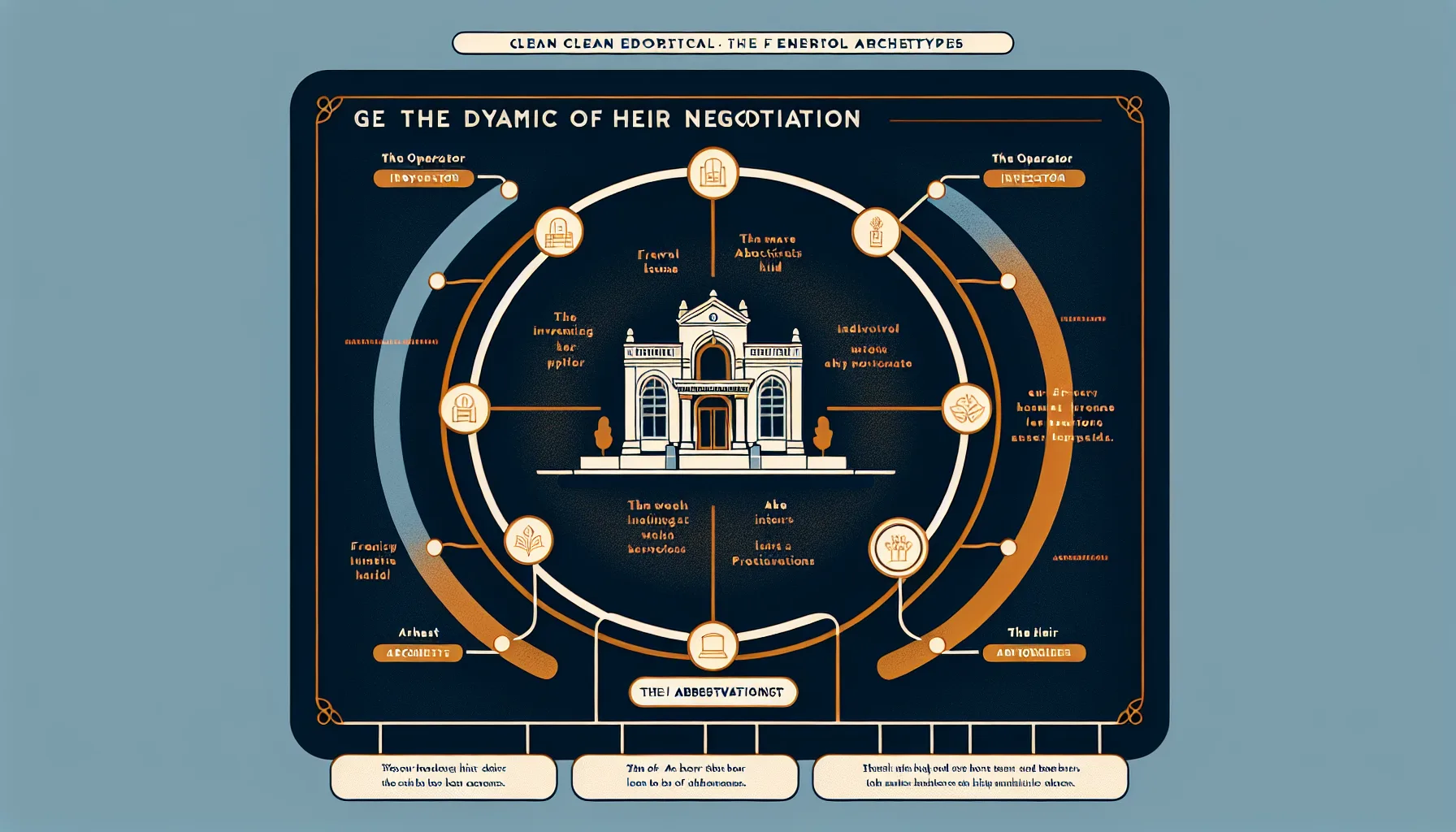
The typical cast
The local sibling. Lives in town, may have been loosely involved in the business. Feels the most responsibility — and often the most resentment about carrying the burden while the others live elsewhere.
The cash-out sibling. Wants their share as quickly as possible. Doesn’t care about the name on the building. Cares about the check.
The sentimental sibling. “Dad built this from nothing.” They want guarantees about how the business will be run and whether the family name stays. May accept a lower price if the legacy feels protected — or block a deal entirely if it doesn’t.
The absent sibling. Doesn’t engage. Doesn’t return calls. Hasn’t said they won’t sell, but hasn’t said they will. Most dangerous to your timeline because nothing closes without their signature.
Power dynamics aren’t equal
Equal ownership shares don’t mean equal influence. The local sibling often has de facto authority because they’ve been physically present. The sentimental sibling may have veto power through sheer emotional force.
What matters to you: identify who the actual decision-maker is. It may not be the person who responds to your emails.
The most dangerous scenario
Heirs who disagree about whether to sell at all. If one sibling wants to sell, one wants to keep the business, and one hasn’t decided, you don’t have a deal — you have a family negotiation that you’ve been invited to watch.
Before you invest serious time or money in diligence, get a clear answer: Have all heirs agreed, in principle, that the business will be sold? If the answer is anything other than an unqualified yes from every heir, pump the brakes.
Valuation Gaps: When Sentiment Meets the Spreadsheet
This is where most heir deals get stuck. And unlike a valuation disagreement with a sophisticated owner-operator, the gap here isn’t about methodology — it’s about meaning.
Why heirs overvalue the business
An owner-operator may overprice their business, but they usually have a frame of reference — comparable sales, broker conversations, market awareness. Heirs almost never have this context. What they have is:
- The story. “Dad started this in 1978 with nothing.” All true. None of it changes the EBITDA multiple.
- A number someone mentioned once. A neighbor or family friend said it was worth $X. That number is now anchored in every heir’s mind.
- Confusion about what they’re selling. Heirs frequently conflate the real estate, operations, preneed book, and goodwill into a single number. They don’t realize the building might be worth $600K while the business operations are worth $400K.
The most common valuation disconnects
Real estate vs. business value. Heirs see the total asset base and assume the “business” is worth the sum of everything. In reality, the real estate and the operating business need separate valuations. Sometimes the real estate is worth more than the business. For a deeper look at what drives the multiple, see our funeral home valuation multiples guide.
Preneed book misunderstanding. Heirs may know the funeral home has “$2 million in preneed contracts” and assume that’s $2 million in revenue waiting to happen. It isn’t. Preneed contracts represent future obligations. The trust fund balance, the funded-to-unfunded ratio, and the fulfillment margin all affect what the preneed book is actually worth. Many buyers discover the preneed book is a liability, not an asset.
Goodwill inflation. Community recognition has value. But goodwill in a funeral home is tied to the founder’s reputation — not just the sign. When the founder is gone, goodwill erodes faster than heirs expect.
How to bridge the gap without insulting the legacy
This requires tact. You are not going to win by telling heirs their parent’s business isn’t worth what they think. You’ll just create an adversary.
Instead:
- Propose a third-party appraisal. Suggest an independent business valuation from a certified appraiser who specializes in death care or professional services. When the number comes from a neutral expert, it’s harder to argue with.
- Show comparables. Compile data on recent funeral home sales in the region or in similar markets. Let the comps speak.
- Use earnout structures. If heirs believe the business will generate $X, build a structure that pays them $X if the business actually performs at that level. This puts their valuation thesis to the test without requiring you to accept it upfront.
- Separate the real estate. If the family owns the building, offer to buy the real estate at market value and the operating business at its independent value. This often gets the total number closer to what heirs expect, while keeping each component properly valued.
The underlying principle: let the data do the talking. Your job isn’t to argue — it’s to create a framework where the numbers resolve the disagreement.
Legal Complexity: Estates, Trusts, and Authority to Sell

Before you negotiate price, before you do diligence, before you spend a dollar on attorneys or appraisals, answer one question: Who has the legal authority to sell this business?
This sounds simple. It is not.
Three common ownership structures after a death
Direct inheritance. The will leaves the business to heirs outright. All heirs must agree to sell and sign the purchase agreement. Most straightforward, but “straightforward” is relative.
Estate ownership. The business is still owned by the deceased’s estate, managed by an executor. The executor may have authority to sell — but that authority may be limited by the will, state law, or court approval requirements.
Trust ownership. The business sits in a trust and the trustee has authority to manage and sell trust assets per the trust document. If the trust restricts sales or requires beneficiary consent, you need to see that language.
Why this matters to you
If you sign a purchase agreement with someone who lacks authority, the agreement may be voidable. Before you go further than a preliminary conversation, ask for:
- A copy of the will or trust document (or confirmation from the family’s attorney of the ownership structure)
- Letters testamentary or letters of administration (for estate-owned businesses)
- Identification of the executor, trustee, or authorized representative
- Confirmation that probate has been completed — or a realistic timeline
The probate problem
If the estate is still in probate, the sale may be delayed by months. Probate timelines vary by state, but six months to a year is common. You can negotiate during probate and even sign a purchase agreement contingent on completion. But you cannot close until the legal authority is clear.
Herding cats: getting all parties to sign
Getting four adults with different addresses, different attorneys, and different levels of engagement to all sign the same documents is an exercise in project management.
- Identify one point of contact. Work with the family to designate a single spokesperson who can relay information, gather feedback, and consolidate responses. This doesn’t mean you only communicate with one heir — but it gives you a single channel for logistics.
- Set clear deadlines. Heirs will take as long as you let them. Build response deadlines into your LOI and purchase agreement. “All heirs must execute the purchase agreement within 14 business days of final draft” is a reasonable term.
- Use a closing coordinator or escrow agent. Someone whose job is to collect signatures, verify identity, and ensure all parties have executed all documents. Don’t manage this yourself.
Representations and warranties from ALL heirs
This is non-negotiable: every heir who has an ownership interest must provide representations and warranties. Not just the spokesperson. Not just the heir who’s been most engaged.
Representations and warranties confirm that each heir has the authority to sell, that there are no undisclosed claims against the business, and that the information provided during diligence is accurate. If one heir is excluded, you have a gap in your protection.
Your attorney should also verify: no liens against the business or its assets, no pending litigation against the estate or any heir individually that could affect the business, and clear title to all assets being transferred.
Operational Reality: What Happens to a Funeral Home Without Its Director
A funeral home without its founding director is a business losing value every day. Assess this honestly before making an offer.
Who’s been running things?
Four scenarios, roughly in order of how worried you should be:
A hired licensed director is in place. Best case. If this person is competent and willing to stay through transition, your operational risk is manageable. Find out their employment terms and whether they’ve been promised anything post-acquisition.
The local heir is managing operations. If the heir is a licensed funeral director, this can work. If they’re unlicensed and making decisions about embalming or arrangements, you may have a regulatory problem.
A skeleton crew is keeping the doors open. Staff handles incoming calls and directs families to partner firms. Every month in this mode, the business loses families to competitors who won’t come back.
Nobody is running it. The business is effectively dormant. This is the worst case, and business value is declining rapidly.
Staff retention risk
Funeral home staff are often deeply loyal to the founder personally. Without that anchor, key employees may have already left or be interviewing. Compensation may have been informal — the founder’s handshake, flexible arrangements — and hard to replicate.
During diligence, interview the staff. Not just management — everyone. Understand who’s planning to stay and what it would take to retain them. Build retention bonuses into your transition plan. For a week-by-week playbook on staffing and operations after closing, see our first 90 days guide.
Preneed obligations don’t stop
The funeral home has preneed contracts — families who paid in advance for future services. Those contracts are legally binding obligations. Families will call. They expect their preneed contract to be honored at the terms they agreed to. The new owner (you) is responsible for fulfilling them.
During Diligence, Get a Complete Accounting
Total preneed contracts outstanding. Trust fund balances and the funded-to-unfunded ratio. Any preneed contracts fulfilled since the director’s departure (and how). State regulatory requirements for preneed trust fund management during ownership transitions.
Licensing gaps
If the founding director held the facility license personally (common in older operations), the business may be operating on a license that’s technically invalid. Check with the state licensing board before closing: current status of all licenses, whether the business can legally operate during transition, and the timeline for obtaining or transferring licenses to you.
The Name Question: Keeping the Family Legacy
“We need you to keep the family name.”
You will hear this in almost every heir deal. It’s the single most emotionally loaded condition of sale, and how you handle it will determine whether the deal closes smoothly or becomes contentious.
When keeping the name makes sense
If families in the area say “we’re going to Smith’s” the way they’d say “we’re going to the doctor,” the name has real economic value. A 12–24 month transition period is smart business regardless of what the heirs want. You protect the asset value you just paid for. For more on navigating the rebranding process, see our guide on earning community trust as a new owner.
When it doesn’t
If community recognition is tied to the founder personally rather than the business name, the brand value diminishes fast after the founder is gone. If you plan to operate multiple locations under a single brand, a legacy name creates confusion.
How to structure the name agreement
The worst thing you can do is make a vague verbal promise. “Oh sure, we’ll keep the name” becomes a years-long dispute when you eventually rebrand.
Put it in writing with clear terms:
- Specific duration. “Buyer will operate under the name ‘Smith Family Funeral Home’ for a minimum of 18 months following closing.” A defined period everyone can agree to.
- Transition format. “Smith Family Funeral Home, a [Your Company] establishment” is a common bridge. It preserves the legacy name while introducing yours.
- What “keeping the name” means. Does it mean the sign stays? The website URL? The stationery? The phone listing? Be specific. Ambiguity breeds conflict.
- Expiration and renewal. After the initial period, the buyer has sole discretion over the business name. No automatic renewal. No perpetual obligation.
If heirs want the name preserved for five years, that’s a concession with real cost to you — and it should be reflected in the deal economics. A lower purchase price or better seller note terms are reasonable tradeoffs.
How to Structure the Offer When You’re Buying from a Family
Heir deals require a different approach to deal structure. The standard LOI-to-purchase-agreement pipeline still applies, but the terms need to account for the unique dynamics of a multi-party sale.
Lead with empathy before leading with numbers
This is strategic, not soft. Heirs who feel respected negotiate in good faith. Heirs who feel like their parent’s life work is being treated as a commodity will entrench and blow up deals over principle.
Before you present a term sheet, visit the funeral home. Learn the history. Ask about the founder. This costs you nothing and buys goodwill that has real dollar value when negotiations get difficult.
Asset purchase, not entity purchase
Buy the assets — not the corporate entity, LLC interests, or partnership interests. This is important in any acquisition, but critical in an heir deal where unknowns are significantly higher. Estate claims, tax liabilities, unreported obligations, or disputes you can’t discover during diligence all stay with the entity. For more on structuring the entity correctly, see our guide on LLC vs S-Corp for funeral home acquisition.
An asset purchase lets you select what you’re buying: physical assets, preneed book, client records, goodwill, real estate. Everything else stays with the estate or the heirs.
Earnout and consulting agreements
Earnouts are particularly effective in heir deals because they bridge the valuation gap without requiring you to pay a premium upfront.
Structure example: Base purchase price of $1.2M at closing, plus an earnout of up to $300K paid over three years based on the business hitting specific revenue or call volume targets. If the heirs believe the business is worth $1.5M, the earnout gives them a path to that number — but only if the business actually performs.
Consulting agreements serve a different purpose. If the local heir has operational knowledge — relationships with clergy, hospice contacts, community connections — a 6–12 month consulting agreement compensates them for transition assistance and gives you access to institutional knowledge that would take years to build on your own.
Seller note from the estate
A seller note — where the estate carries back a portion of the purchase price — can work well in heir deals. It gives the heirs an income stream rather than a lump sum (which some heirs may prefer for tax reasons), and it keeps them financially invested in a smooth transition.
Typical terms: 10–20% of the purchase price, 5–7% interest, 5-year term, subordinated to any senior debt. If you’re using SBA financing, the seller note must comply with SBA standby requirements (24 months full standby if the note counts toward your equity injection).
Key contingencies for heir deals
Your purchase agreement should include contingencies specific to the heir scenario:
- All-heir approval. The agreement is contingent on all heirs with ownership interest executing the purchase agreement. Not most heirs. All.
- Clear title. Verified clear title to all assets, free of liens, encumbrances, and competing claims.
- Licensing verification. Confirmation that all facility and individual licenses are current, transferable, or obtainable prior to closing.
- Staff retention period. Key employees must remain employed through a defined transition period (typically 90 days post-closing). If critical staff leave before closing, you have an out.
- Probate completion. If the estate is still in probate, the agreement is contingent on probate being completed and the executor having clear authority to sell.
- Preneed trust compliance. Verification that preneed trust funds are fully funded per state requirements and that all preneed contracts are properly documented.
Red Flags That Should Stop the Deal
Not every heir deal is worth pursuing. Some are fundamentally broken, and no amount of creative structuring will fix them. Walk away if you see any of these:
Heirs who can’t agree on basic terms after 60 days. You’ve given them a fair offer. You’ve been patient. You’ve accommodated multiple rounds of family discussions. If they still can’t agree on price, terms, or timeline after two months of active engagement, they won’t agree in month three or month six. The family dynamic is the problem, and it’s not your problem to solve.
Active litigation between heirs or against the estate. If siblings are suing each other, if the will is being contested, or if creditors have filed claims against the estate, your purchase agreement is subordinate to whatever the court decides. You could sign a deal, invest in transition planning, and have the entire transaction unwound by a judge.
No clear legal authority to sell. If the estate is still in probate, the will is disputed, or nobody can produce documentation showing who has authority to transfer the business assets, stop. This isn’t a negotiation problem — it’s a legal prerequisite that hasn’t been met.
Extended operation without a licensed director. If the funeral home has been operating without a properly licensed funeral director for months, you have potential regulatory liability. The state board may have grounds for action against the business. Fines, sanctions, or license revocation could follow you as the new owner.
Preneed trust fund irregularities. If the preneed trust fund is underfunded, if funds have been commingled with operating accounts, or if the accounting is unclear, this is a serious problem. Preneed trust fund violations can trigger state regulatory action and create personal liability for the business owner — which would be you after closing.
The silent heir. One heir won’t engage but won’t formally refuse to sell. They don’t respond to the attorney’s letters. They don’t attend family meetings. They don’t sign documents. This person has effective veto power over the entire transaction, and there’s no mechanism to compel their participation short of a partition action (which the other heirs would need to initiate — and which takes months to years).
If you encounter one of these red flags, it doesn’t necessarily mean the deal is dead forever. But it means you should stop investing time and money until the issue is resolved. And in most cases, that resolution needs to come from the heirs, not from you.
Frequently Asked Questions
Should I wait for heirs to sort out their disputes before making an offer?
It depends on what they’re disputing. If the disagreement is about price or terms, your offer might actually help — it gives them a concrete proposal to react to rather than an abstract debate. Making an offer can crystallize the discussion and force decisions.
If the disagreement is about whether to sell at all, don’t make an offer. You’ll become a pawn in their family argument, and your offer will be used as ammunition by whichever side finds it convenient. Wait until all heirs have agreed in principle to sell, then engage.
If the dispute involves legal issues — contested will, probate challenges, litigation — wait until those are resolved. Any agreement you reach is potentially voidable if the underlying legal authority is in question.
Can I buy just one heir’s share of a funeral home?
Technically, yes. Practically, almost never a good idea. Buying a partial interest makes you co-owners with the remaining heirs. You have no operational control unless the operating agreement grants it. You’re now in the exact family dynamic you were trying to avoid — except you’re inside it.
The exception: if buying one heir’s share gives you majority control with decision-making authority, it could work as a first step toward acquiring the remaining shares. Structure this carefully with your attorney — you need buyout provisions, drag-along rights, and clear operational authority. In general, if all heirs won’t sell, this isn’t your deal.
How long does a typical heir-sale transaction take compared to an owner-operator sale?
Longer. Sometimes much longer.
An owner-operator sale, from LOI to closing, typically takes 90–120 days if financing is pre-arranged and diligence goes smoothly.
An heir sale commonly takes 150–240 days, and six months to a year isn’t unusual if probate is involved. The additional time comes from:
- Multiple decision-makers requiring more rounds of review and negotiation
- Probate or estate administration timelines
- The absent or reluctant heir slowing signature collection
- Valuation disagreements that require third-party appraisals
- Emotional processing — heirs may need time to come to terms with selling their parent’s business, and that timeline doesn’t conform to your deal schedule
Build this extended timeline into your planning. If you’re using SBA financing, make sure your rate lock and commitment letter accommodate a longer closing period. If you have a competing opportunity with a faster timeline, weigh the opportunity cost honestly.
The heir deal is more complex than a standard acquisition. It takes longer, requires more patience, and demands a different kind of negotiation skill. But the opportunity is real: these businesses are often well-established, deeply rooted in their communities, and available at reasonable valuations precisely because the transaction complexity scares off less committed buyers. If you’re willing to navigate the family dynamics, manage the legal complexity, and structure the deal with empathy and precision, you’ll find opportunities that the buyers looking for clean, simple transactions will never see.
This article is educational and does not constitute financial, legal, tax, or investment advice. Estate law, probate procedures, and licensing requirements vary by state and change over time. Consult qualified professionals for advice specific to your transaction.