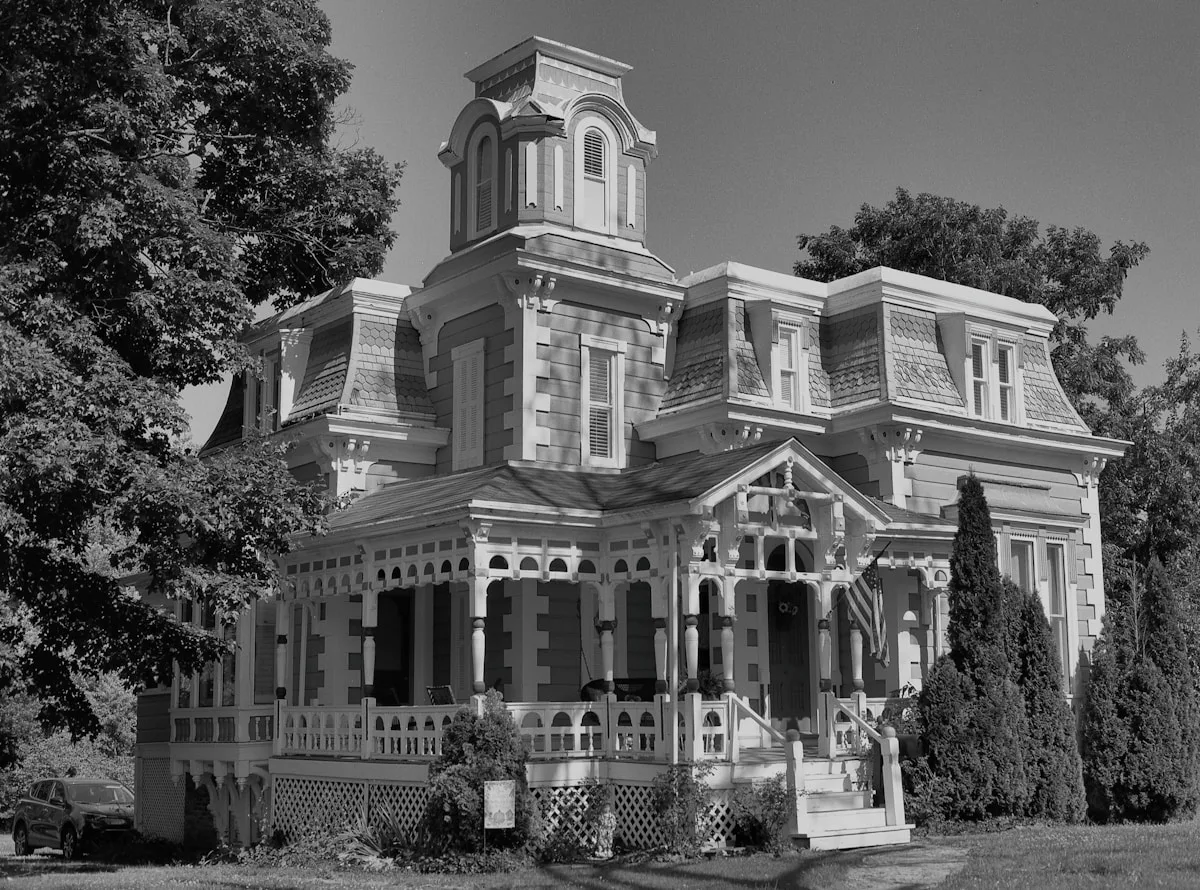
You’re acquiring a funeral home. The seller quotes you a price. But buried in that number is a question most buyers don’t think to separate: how much of what you’re paying is for the business, and how much is for the building?
The answer reshapes everything — your financing, your deal structure, your operating costs, your exit strategy. Get this decision wrong and you’ll either overextend on capital or leave hundreds of thousands of dollars in equity on the table.
Private equity firms understand this instinctively. They’ve made fortunes by acquiring funeral homes, stripping out the real estate through sale-leasebacks, and monetizing property value that the original owner never separated from the business. You don’t need to copy their playbook — but you need to understand it.
Here’s how to think through the real estate component of your funeral home acquisition.
Special-Use Property: What It Means and Why It Matters
Funeral homes are classified as special-use or single-use properties. This matters more than most buyers realize.
A special-use classification means:
- Fewer comparable sales for appraisals. Unlike an office building or retail space, there aren’t dozens of funeral home property transactions to benchmark against. Appraisers may struggle to find comps within 100 miles, and the ones they find may not be comparable in size, condition, or market.
- Financing is more complex. Lenders view special-use properties as higher risk because the pool of potential buyers is small if you default. This affects loan terms, interest rates, and LTV ratios.
- Conversion costs are prohibitive. Turning a funeral home into a restaurant or office space typically costs $200,000–$500,000+ due to layout, zoning, and environmental remediation. This limits the building’s alternate-use value.
The silver lining: because few buyers want a building designed for viewings, prep rooms, and casket displays, the limited buyer pool can actually reduce competition for the real estate component. You may get the building at a price that doesn’t reflect its replacement cost.
Buy the Building: The Case For and Against
Why You Should Buy
- Cost stability. Your occupancy cost is fixed by your mortgage payment, not subject to rent escalations. Over a 25-year SBA loan term, this predictability compounds into significant savings.
- Full collateral position. Owning the real estate gives you the strongest collateral for financing. Lenders prefer secured positions, and a building you own is the best security you can offer.
- Equity building. Every mortgage payment builds ownership equity. After 15–20 years, you own a building outright while a leasing operator still has monthly rent obligations.
- Operational control. You decide when to renovate, how to maintain, what to modify. No landlord approval needed to build out a crematory, convert a chapel, or add parking.
- Valuation premium. Funeral homes that include real estate typically trade at a 0.5x–1.0x higher multiple than those without. When you sell, you sell a complete package. The valuation guide explains how this affects your total deal.
Why You Might Not
- Higher capital requirement. Real estate adds 30–50% to the total acquisition cost. A funeral home worth $800,000 as a business might require $1.2–$1.5 million when the building is included.
- Deferred maintenance risk. Older funeral home buildings can harbor expensive problems: aging HVAC systems ($80,000–$150,000 to replace), failing roofs ($50,000–$100,000), ADA compliance gaps ($30,000–$75,000), and prep room upgrades ($40,000–$80,000).
- Concentration risk. Your entire investment — business and building — is tied to a single property in a single market. A zoning change, environmental issue, or demographic shift affects both.
- Property tax and insurance burden. Commercial property taxes in some jurisdictions run 2–4% of assessed value annually. Combined with commercial property insurance, your carrying costs can add $15,000–$40,000 per year beyond the mortgage.
Lease the Building: The Case For and Against
Why Leasing Can Work
- Lower upfront capital. Without real estate, your total acquisition cost drops significantly, potentially making the deal viable with less equity or a smaller SBA loan.
- Flexibility. If the market shifts, you can relocate at lease end. In a declining community, this flexibility has real strategic value.
- Maintenance sharing. Depending on lease structure (NNN vs. modified gross), the landlord may carry some or all of the structural maintenance burden.
Why Leasing Creates Risk
- No equity accumulation. Every rent payment is pure expense. After 20 years of leasing, you own exactly what you started with: nothing.
- Rent escalation exposure. Most commercial leases include 2–3% annual escalators or CPI adjustments. Over a 15-year term, a $5,000/month lease becomes $7,000–$8,000/month — an increase that directly compresses your margins.
- Lease-dependent business. Your business exists at the landlord’s discretion. A lease non-renewal, an unreasonable rent increase, or a landlord bankruptcy creates existential risk for your operation.
- Harder to finance. Without real estate collateral, lenders offer shorter terms (10 years vs. 25), higher interest rates, and more restrictive covenants. The SBA’s collateral requirements are more difficult to satisfy without property.
- Lower exit valuation. When you eventually sell, a buyer evaluating your business without real estate will apply a lower multiple. You’re selling cash flow without assets — a fundamentally less attractive proposition.
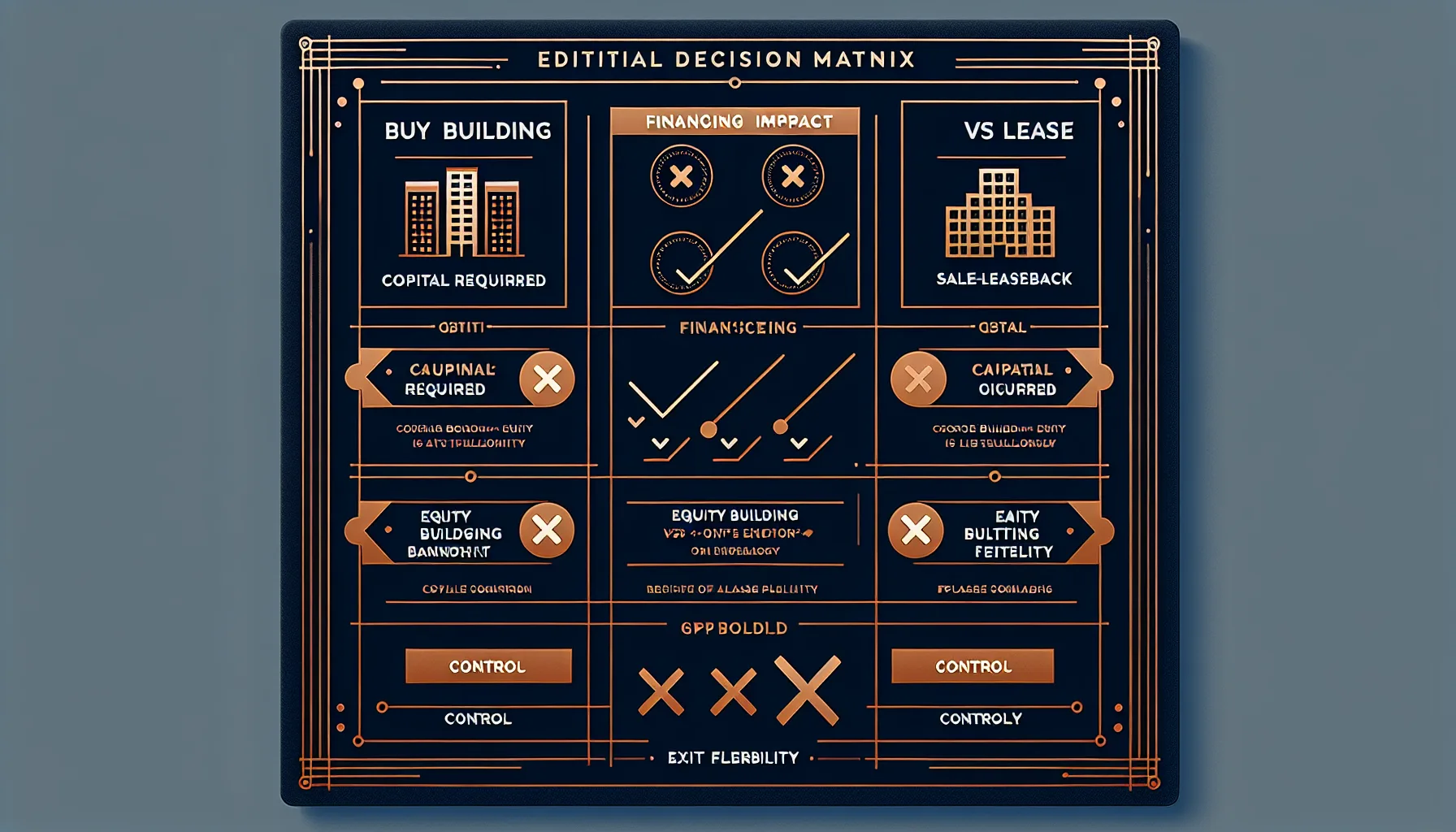
The Sale-Leaseback: A Third Option Worth Understanding
There’s a hybrid approach that PE firms have used to extract enormous value from funeral home real estate — and it’s available to individual buyers too.
How it works: You acquire the funeral home including the real estate, then sell the building to a real estate investor and lease it back under a long-term agreement (typically 10–20 years with extension options).
Why PE firms love this:
- It extracts 100% of the property’s equity versus the 50–70% a mortgage provides
- The cash freed up can fund additional acquisitions, renovations, or debt paydown
- The lease payments are fully deductible as an operating expense
- The balance sheet looks lighter, which can improve financing terms on future deals
The reality check: Currently, only about 6% of funeral homes operate under a lease arrangement. The market for funeral home sale-leasebacks is thin, and the investors willing to buy special-use properties demand cap rates that reflect the limited buyer pool if you default.
When it makes sense:
- You’ve acquired a property well below replacement cost and can sell at a premium
- You want to fund a second acquisition without raising new equity
- Your operating business is strong enough to service both the lease and remaining business debt
When it doesn’t:
- You’re acquiring in a small market where the real estate investor pool is essentially zero
- The building needs significant capital expenditure that you’d be making on someone else’s property
- Your lease terms would exceed what the business can comfortably service
Evaluating the Building: What to Inspect Before You Decide
Before you decide whether to include the real estate, you need to know what you’re actually buying. Funeral home buildings have unique inspection requirements:
Structural Systems
- HVAC: Funeral homes require specialized ventilation, especially in prep rooms (formaldehyde extraction). Systems are expensive and custom. Age, capacity, and OSHA compliance status are critical. Budget $80,000–$150,000 for full replacement.
- Roof: Commercial roofs on funeral homes are often flat, which means drainage issues. Budget $50,000–$100,000 for replacement on a typical single-location building.
- Plumbing: Prep room drainage must meet EPA and local pretreatment requirements. Older buildings may have inadequate waste handling systems.
- Electrical: Modern casket display lighting, multimedia chapel systems, and crematory equipment (if present) demand significant electrical capacity. Older buildings may need panel upgrades.
Prep Room Requirements
The preparation room is the most regulated space in the building. Verify:
- Ventilation meets OSHA formaldehyde exposure limits (0.75 ppm TWA, 2 ppm STEL)
- Drainage meets local wastewater requirements
- Flooring and surfaces meet biohazard cleanup standards
- Equipment is functional and current on maintenance

Zoning Verification
Never assume zoning is current. Funeral homes sometimes operate as legal non-conforming uses (grandfathered in). A change of ownership can trigger a zoning review. Verify with the local planning department — in writing — that the funeral home use survives a change of ownership. Read more about zoning and land use risk.
Environmental Assessment
Funeral homes handle regulated chemicals and generate biomedical waste. A Phase I Environmental Site Assessment ($3,000–$5,000) is non-negotiable if you’re buying the building. Environmental liabilities follow the property — not the previous owner. If the Phase I flags concerns, a Phase II assessment ($10,000–$50,000+) determines the scope and cost of remediation.
ADA Compliance
Older funeral home buildings frequently have ADA accessibility gaps: narrow doorways, inaccessible restrooms, lack of ramps, no elevator access to upper floors. Budget $30,000–$75,000 for common ADA modifications.
Capital Expenditure Estimation
Total your findings into a 5-year and 10-year capital expenditure budget. This number is critical for two reasons:
- It affects your total acquisition cost calculation — a building that needs $200,000 in repairs in years 1–3 isn’t $200,000 cheaper to buy than a turnkey building. It’s roughly the same cost with worse cash flow timing.
- It informs your buy-vs-lease decision. If the building needs $300,000 in deferred maintenance, leasing may make more sense — let the landlord carry that burden.
How the Real Estate Decision Affects Your Financing
The buy-vs-lease choice fundamentally changes your financing conversation:
Buying with Real Estate
- SBA 7(a): Up to 25-year terms on the real estate portion, with 10-year terms on the business assets. Blended payments create manageable debt service.
- SBA 504: Specifically designed for real estate acquisition. Can cover up to 40% of the real estate cost with below-market fixed rates. The SBA’s 504 program is underutilized in funeral home transactions.
- Stronger collateral: Real estate gives lenders a tangible recovery asset. This typically means better rates, lower equity requirements, and faster approvals.
Buying without Real Estate
- Shorter terms: Without real estate collateral, expect 10-year terms maximum on SBA 7(a) loans. Monthly payments are higher, cash flow tighter.
- Higher rates: Unsecured or under-secured loans carry risk premiums of 0.5–1.5% above secured rates.
- Additional collateral required: Lenders may require personal guarantees, life insurance assignments, or liens on other personal assets.
The Special-Use Appraisal Problem
One critical financing reality: special-use property appraisals can come in lower than expected. The limited comp pool and restricted alternate use often depress appraised values below what the seller considers fair market value. This creates a gap between the deal price and the lender’s collateral value that you’ll need to bridge with additional equity.
Get an appraisal estimate before committing to the real estate component. An appraisal surprise at the eleventh hour has killed more funeral home deals than any negotiation issue.
Frequently Asked Questions
Is it better to buy or lease the funeral home building?
It depends on your capital position, market, and strategy. Buying builds equity and gives you control. Leasing preserves capital and flexibility. If you can fund the purchase and plan to hold for 10+ years, buying almost always produces a better long-term outcome. If you’re capital-constrained or uncertain about the market, leasing lets you operate while you build the business.
How does real estate affect funeral home valuation?
Funeral homes with owned real estate typically trade at 0.5x–1.0x higher SDE multiples than those without. The building adds tangible asset value, strengthens financing options for buyers, and reduces operational risk. The valuation guide covers this in detail.
What is a sale-leaseback and does it make sense for a single-location buyer?
A sale-leaseback means you buy the property, then sell it to an investor and lease it back. It makes sense if you want to free up capital for renovations, debt reduction, or a second acquisition. For most single-location buyers, it’s unnecessary complexity — just own the building. It becomes strategic when you’re ready to scale.
How much should I budget for building repairs?
Start with a professional building inspection and a Phase I environmental assessment (combined cost: $5,000–$8,000). Most funeral home buildings need $50,000–$200,000 in capital improvements in the first five years. Factor this into your total acquisition cost — not as a surprise expense after closing.
Can I get an SBA loan without buying the real estate?
Yes, but the terms change. Without real estate collateral, you’ll get shorter loan terms (10 vs. 25 years) and potentially higher rates. You’ll need strong projected cash flow and possibly additional collateral to compensate. The SBA financing guide covers the specifics.
The real estate question isn’t a side issue in your funeral home acquisition — it’s a core strategic decision that affects every other number in your deal. Answer it early, answer it deliberately, and let it shape your financing, negotiation, and long-term plan from the start.