
You’re evaluating a funeral home acquisition. The numbers look good: 280 calls a year, stable for a decade, strong community reputation. You ask the owner where first calls come from. The answer: “Hospice referrals, hospital morgue, word of mouth. Same as always.”
Here’s the question nobody is asking: how long will those channels remain intact when venture-backed platforms are spending millions to become the first place families go when someone dies?
The Companies Building the Online Front Door to Death Care
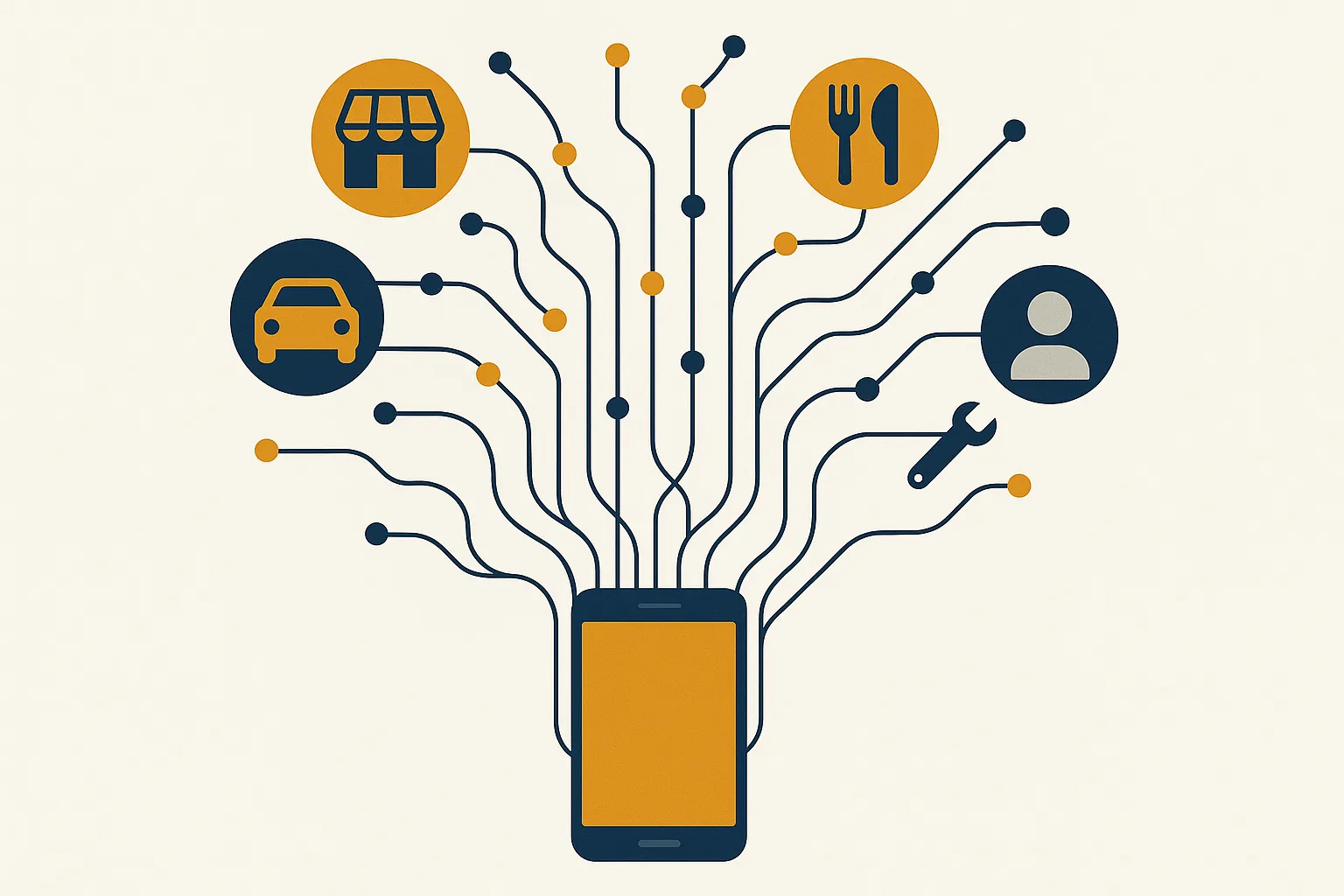
A new category — “grief tech” — has emerged in the last three years. These aren’t funeral homes. They’re technology platforms that insert themselves between the grieving family and the local funeral provider:

Empathy (Series B funded)
- Platform that guides families through every post-loss task: probate, account closures, benefits claims, funeral planning
- Partners directly with life insurance companies and employers to be offered at point of claim
- The family engages Empathy BEFORE they contact a funeral home — Empathy then routes them to options
After.com
- Direct cremation price comparison and online booking
- Families search by zip code, compare prices, and arrange cremation without ever calling a funeral home
- Positioned as the “Kayak for cremation” — aggregates and commoditizes local providers
Lantern
- End-of-life planning and executor guidance platform
- Helps families pre-plan, document wishes, and organize logistics before death occurs
- When death happens, Lantern’s pre-built plan routes the family to its partner network
Others in the ecosystem:
- GatheringUs (virtual memorial planning)
- Eterneva (memorial diamonds and physical memorials)
- Cake (end-of-life planning directory)
- Various direct-cremation-only operators with pure digital customer acquisition
These companies have raised tens of millions in venture capital. They are not building funeral homes. They are building the layer between families and funeral homes. The Cremation Association of North America has tracked this shift as part of the broader transformation in how families approach end-of-life services.
How They Intercept Families Before Your Phone Rings
The traditional funeral home first-call path looks like this:
Death occurs → family asks “what do we do?” → they call the funeral home they know (or the one hospice/hospital recommends) → funeral home manages everything
The grief tech path looks like this:
Death occurs → family Googles “what to do when someone dies” → grief tech platform appears in search results → platform guides family through logistics → platform presents funeral home options (or handles disposition directly) → funeral home receives a routed lead, not a first call
Why this works:
1. SEO dominance. Grief tech companies with VC marketing budgets outrank individual funeral homes for every informational query: “what to do when someone dies,” “how to plan a funeral,” “cheapest cremation near me.” They capture the family at the research stage — 50–70 hours of research that families currently do before making a decision.
2. AI-powered assistance. These platforms use AI to reduce that 50–70 hour research burden to minutes. A chatbot that answers “what are my options?” is faster and less intimidating than calling a funeral home. AI tools are already handling 60% of routine price inquiries in the industry.
3. Institutional partnerships. Empathy partners with life insurance companies and employers. When an employee dies, the company offers Empathy as a benefit to the surviving family. The family engages Empathy — not a funeral home — as their first point of contact with the death care system.
4. Pre-need capture. Platforms like Lantern and Cake capture families BEFORE death occurs, during planning. By the time death happens, the family already has a plan that routes to the platform’s partners — not necessarily your funeral home.
The Channel Economics That Should Worry Buyers
This isn’t just about market share. It’s about the economics of how families reach you:
Today’s cost of acquisition: ~$0
Most funeral homes get first calls through word of mouth, community reputation, and hospice/hospital referrals. The customer acquisition cost is effectively zero — built on decades of relationship investment by the previous owner.
Tomorrow’s cost of acquisition: 15–25% of revenue
When a platform routes a family to your funeral home, they charge for it. Some charge referral fees. Others operate as the “seller” and subcontract disposition to you at wholesale rates. Either way, your revenue per family interaction drops significantly. The disposition-first movement is accelerating this trend as more families separate body care from ceremony.
The platform power dynamic:
- Once families are in the platform’s ecosystem, the funeral home becomes interchangeable. You’re a fulfillment option, not a trusted advisor.
- Platforms control the information the family sees. They can present your prices alongside every competitor’s. They can highlight the $895 direct cremation option next to your $7,000 full-service package.
- Platforms accumulate data about family preferences, price sensitivity, and behavior — intelligence that individual funeral homes never see.
The VC subsidy problem:
Venture-backed companies can operate at a loss for years while building market share. They don’t need to be profitable today. They need user growth, market penetration, and behavioral change. Once families habitually start their death care journey online — not with a phone call — the platforms win regardless of their current unit economics.
Which Funeral Homes Are Most Exposed
Not every acquisition target faces equal grief tech risk. Evaluate these factors:
High exposure:
- Weak online presence (no website optimization, few Google reviews, not appearing in local search)
- Heavy reliance on hospital/hospice referral channels that grief tech platforms are actively targeting
- Located in urban/suburban markets with high internet adoption and price transparency expectations
- Markets with multiple providers where comparison shopping is easy and switching costs are low
- No preneed program (no locked-in families who’ve already committed)
Lower exposure:
- Strong community reputation built over generations (search for the “community moat”)
- Rural markets with limited broadband adoption and strong in-person relationship culture
- Funeral homes with active referral networks with hospice and clergy that are personal, not institutional
- Large preneed backlog (those families are already committed, platform or no platform)
- Active community programming that creates ongoing touchpoints beyond the death event
Due Diligence: Evaluating Grief Tech Exposure
Before closing, research the competitive digital landscape around your acquisition target:
1. Source analysis — where do first calls actually come from?
Ask the seller to break down first calls by source:
- Direct (family already knew the funeral home): ___%
- Hospice referral: ___%
- Hospital/nursing home referral: ___%
- Google/online search: ___%
- Other: ___%
If >30% come from channels that grief tech platforms are targeting (online search, institutional referrals), that volume is at risk.
2. Platform presence check
Search for the funeral home on:
- After.com (are they listed? what are the reviews? what price is displayed?)
- Google Maps (how do they rank relative to competitors and to aggregator sites?)
- “Direct cremation [city]” and “funeral homes near me” — who appears above them?
If the funeral home is already on comparison platforms with mediocre reviews, the family’s first impression is being shaped by someone else.
3. Competitive SEO audit
Google the informational queries families ask:
- “What to do when someone dies in [city/state]”
- “How much does a funeral cost in [city]”
- “Cremation options [city]”
Who ranks on page one? If it’s grief tech platforms and not the funeral home, families are being intercepted.
4. Market penetration assessment
Is any direct-to-consumer cremation provider (like After.com, or a regional online-only cremator) actively marketing in this market? If yes, they’re already pulling volume.
Defensive Strategies for Post-Acquisition
If you buy, here’s how to build a moat against grief tech platform encroachment:
Own your digital presence immediately.
Invest in local SEO within the first 90 days. The digital marketing playbook for new funeral home owners covers the tactical steps. The goal: when families in your market Google their questions, YOUR funeral home appears — not a platform.
Build relationships platforms can’t replicate.
Grief tech companies are good at digital scale. They are terrible at in-person community relationships. Double down on:
- Personal hospice relationships (not institutional partnerships — the platform targets those)
- Clergy connections
- Grief support groups you host
- Community events and education programs
These are analog moats. A platform can’t replace the chaplain who trusts you personally.
Consider selective platform partnership.
Counterintuitive: rather than fighting every platform, partner with one selectively. Be the preferred provider for Empathy or a regional platform in your market. Better to have a seat at the table than to be commoditized by a platform you ignored.
The tradeoff: you’ll pay referral fees on those families. But you’ll also get volume you might have lost entirely.
Create your own digital front door.
Build content, resources, and tools on your own website that serve families at the research stage — before they find a platform:
- Pricing transparency (yes, post your prices — families will find them elsewhere anyway)
- “What to do when someone dies” guides specific to your state/county
- Online arrangement scheduling
- Chat or text communication options
If you become the answer to their question, they don’t need a platform to find you.
The Buyer’s Bottom Line
Grief tech platforms represent a channel threat, not (yet) an existential one. The funeral homes most at risk are those that depend on being found — through search, through institutional referrals, through being the only option. The funeral homes that are safe are those that are chosen — through relationships, community presence, and trust built over time.
When evaluating an acquisition:
- High risk: if volume depends on channels grief tech targets, discount accordingly
- Medium risk: if volume comes from relationships that are strong but aging (the hospice relationship depends on one person retiring next year), invest in transition
- Low risk: if volume comes from deep community embeddedness that took decades to build, the moat is real — but maintain it aggressively
The grief tech companies are well-funded and growing. They may not kill the funeral home industry. But they will change how families arrive at your door. The question for buyers: when the front door moves online, will your acquisition be behind it or bypassed by it?
Evaluating competitive threats is essential acquisition due diligence. For more on assessing a funeral home’s digital position, see our guide on Google reviews as due diligence.
This guide is part of the Funeral Home Buyer resource library — acquisition intelligence for serious buyers, from due diligence through operations.
Funeral Home Buyer provides educational content for professionals evaluating business acquisitions in the funeral services industry. This article is not legal, financial, or investment advice. Consult qualified professionals before making acquisition decisions.