
Cremation Was the First Disruption. Alkaline Hydrolysis Was the Second. NOR Is Next — and It Changes the Math Differently.
If you’re acquiring a funeral home in 2026, you’ve already modeled the cremation trajectory. You may have evaluated whether alkaline hydrolysis is worth offering. But there’s a third disposition method growing faster than either of those did in their early years — and it operates on a completely different infrastructure model.
Natural organic reduction (NOR), commonly called human composting, is now legal in 13 states and expanding. New Hampshire’s HB 1457 is advancing with bipartisan support in 2026. Minnesota legalized it in 2024. New York, California, and Colorado joined in 2023.
For funeral home buyers, NOR isn’t just another green burial option. It’s a fundamentally different service model with different capital requirements, different competitive dynamics, and different implications for your acquisition thesis.
How NOR Works — The 60-Second Version
The body is placed in a steel vessel along with wood chips, alfalfa, and straw. Controlled oxygen and heat accelerate natural decomposition. Over approximately 45 days, the body is transformed into roughly one cubic yard of nutrient-rich soil. The family receives the soil — typically enough to fill several large planters or amend a garden bed — as the equivalent of what ashes are in cremation.
No embalming. No casket. No vault. No cemetery plot. No headstone.
That list of “no’s” is why NOR matters for your acquisition math.
The Current NOR Landscape
Major Providers
- Recompose (Seattle, WA) — The pioneer. Founded by Katrina Spade, opened in 2021. Charges approximately $7,000 per transformation. Operates 10+ vessels.
- Return Home (Auburn, WA) — Operates 65 vessels. Pricing starts at $4,950 (not including transportation or death certificate/permit services). Expanding to the East Coast in 2026.
- Earth Funeral (Des Moines, WA) — Opening an East Coast facility in early 2026.
- Natural Organic Reduction of Arizona (NORAZ) — $5,450 for Arizona residents, $5,950 for out-of-state.
Where It’s Legal (as of May 2026)
Arizona, California, Colorado, Delaware, Georgia, Maine, Maryland, Minnesota, Nevada, New Jersey, New York, Oregon, Vermont, and Washington. Legislation is pending or recently introduced in New Hampshire, Illinois, Massachusetts, and several other states.
Pricing Context
| Disposition Method | Typical Cost Range |
|---|---|
| Traditional burial (full service) | $7,000–$12,000+ |
| Natural organic reduction | $4,950–$7,000 |
| Alkaline hydrolysis | $3,000–$5,500 |
| Direct cremation | $1,000–$3,500 |
| Green burial (no embalming, biodegradable container) | $2,000–$5,000 |
NOR sits at a premium price point — above cremation and alkaline hydrolysis, comparable to or below traditional burial. This is significant. Unlike the cremation wave, which was largely driven by cost savings, NOR appeals primarily to values-driven consumers willing to pay more for environmental alignment.
What This Means for Your Acquisition
Scenario 1: You’re Buying in a State Where NOR Is Legal
If you’re acquiring a funeral home in one of the 13+ states with legal NOR, you need to evaluate:
Does the target currently offer NOR referrals? Some funeral homes already partner with NOR facilities, handling the arrangement, documentation, and transportation while the NOR provider handles the actual reduction. This is the lowest-barrier entry point — no capital investment, just a service agreement.
What’s the local demand signal? Ask the seller: Have families asked about human composting? How many in the last year? If the answer is “never,” that tells you something about the market. If the answer is “frequently, and we had to tell them we don’t offer it,” that tells you something else entirely.
Who’s competing for NOR families? In most markets, the competitive threat isn’t another funeral home offering NOR. It’s the NOR providers themselves. Recompose and Return Home operate as full-service funeral homes, not just disposition facilities. They’re capturing the entire arrangement — not just the composting step. If they’re active in your market, they’re pulling environmentally conscious families out of your target’s funnel entirely.
Scenario 2: You’re Buying in a State Where NOR Isn’t Legal Yet
The question isn’t whether NOR is relevant to your acquisition today. It’s whether it will be relevant during your ownership period.
If you’re planning a 7–10 year hold — which is typical for a funeral home acquisition — and your state has active NOR legislation pending, you should model the possibility. Not as a certainty, but as a scenario.
The financial impact depends on your market:
- Urban, progressive demographics — Potential 3–8% volume shift to NOR within 5 years of legalization, based on early Washington state patterns
- Suburban, mixed demographics — Potential 1–3% volume shift
- Rural, traditional demographics — Minimal near-term impact
These percentages sound small. But they compound with the ongoing cremation shift. A funeral home that’s already lost margin to cremation and now loses another slice to NOR has a fundamentally different revenue trajectory.
Scenario 3: You’re Considering Building NOR Capacity
This is where NOR diverges sharply from both cremation and alkaline hydrolysis as a capital project.
A cremation retort fits in an existing building. Capital cost: $150,000–$350,000 for the equipment, plus facility modifications. Your existing staff can be trained to operate it.
An alkaline hydrolysis system also fits in an existing building (roughly the footprint of a prep room). Capital cost: $150,000–$400,000 depending on the system. Water and wastewater infrastructure are the main facility requirements.
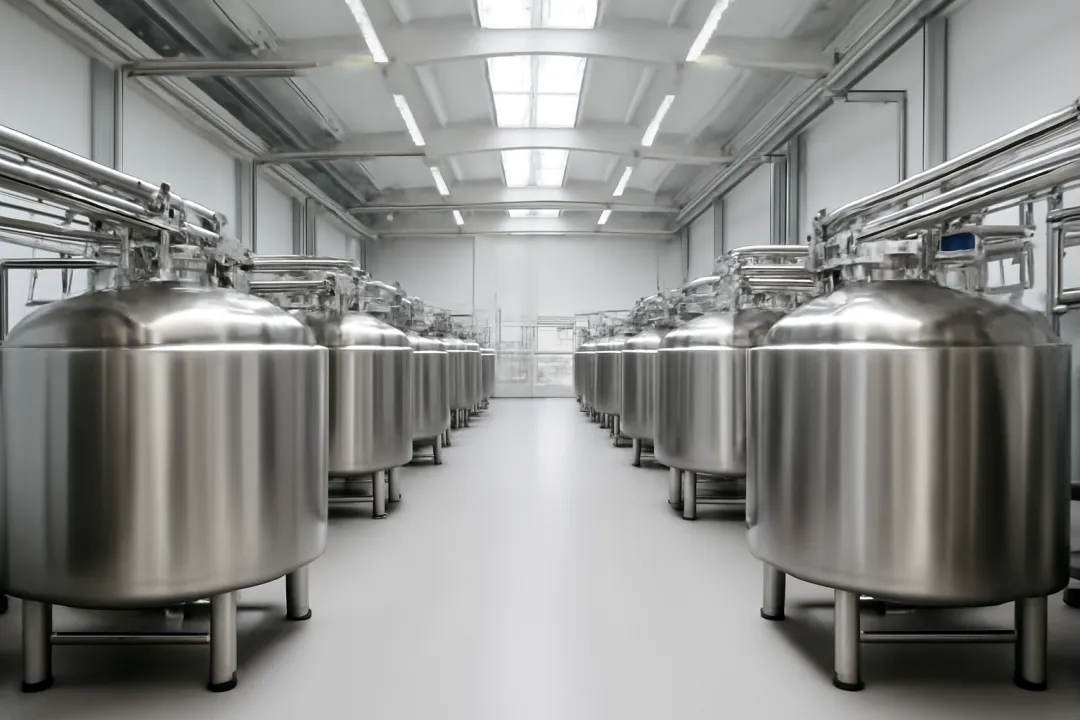
An NOR facility is a different animal entirely. You need:
- Specialized steel vessels (each handles one body at a time over a 45-day cycle)
- Climate-controlled space for the vessels — significantly more square footage than a crematory
- Post-processing equipment (screening, final reduction)
- Dedicated staff trained in the NOR process
- State-specific licensing (varies widely, still being established in newer states)
- Zoning approvals — some communities treat NOR facilities differently than crematories under local land use codes
Return Home operates 65 vessels to handle its volume. Recompose opened with 10 but planned for 32. The capital investment for a meaningful NOR operation — one that can handle 100+ cases annually — likely runs into the seven figures when you include facility buildout.
For most individual funeral home buyers, building dedicated NOR capacity doesn’t pencil out. The referral model — partnering with an existing NOR facility — is the rational starting point.
The Competitive Intelligence Question
When you’re evaluating a funeral home acquisition in an NOR-legal state, add these questions to your competitive analysis:
- Is there an NOR facility within 150 miles? If yes, families in your target’s service area already have access, whether or not your target offers it.
- What percentage of the target’s at-need calls come from environmentally oriented families? Cross-reference this with the consumer behavior analysis. Families who chose green burial, direct cremation with scattering, or tree pod memorials are the segment most likely to shift to NOR.
- Does the target’s competitor set include NOR providers? Recompose and Return Home market directly to consumers. If they’re active in your market, they’re competition — not partners.
- What’s the target’s brand positioning on sustainability? A funeral home that has already invested in green burial options and positions itself as eco-conscious can add NOR referrals naturally. One that hasn’t will need to build that brand identity from scratch. The branding transition is relevant here.
The Revenue Impact Model
NOR’s revenue impact on a traditional funeral home is counterintuitive. Unlike cremation — which disrupted funeral home economics by eliminating casket revenue, embalming, and viewing room use — NOR families often spend more than direct cremation families:
- NOR base fee: $5,000–$7,000 (more than a direct cremation at $1,000–$3,500)
- Pre-NOR services — Many NOR families still want a viewing, a memorial service, or a celebration of life before the body goes to the NOR facility
- Transportation — Moving the body to an NOR facility (which may not be local) generates transfer fees
The risk isn’t revenue per case. It’s volume loss if NOR-focused competitors capture families who would have otherwise used your funeral home for any disposition method.
What Smart Buyers Are Doing
The buyers who are ahead of this curve are:
- Establishing referral relationships with NOR providers now — even before demand is significant. Being the funeral home that says “yes, we can arrange that” when a family asks about human composting is a competitive advantage over the one that says “we don’t do that.”
- Tracking NOR inquiries as a market signal — Add “human composting inquiry” as a category in your first-call log and intake records. This data becomes valuable for strategic planning.
- Monitoring state legislation — If your state doesn’t currently allow NOR, know where the legislation stands. The pattern is clear: legalization is expanding, not contracting.
- Not overreacting — NOR is growing, but it’s not the next cremation. The 45-day timeline, the soil return, and the limited provider infrastructure mean adoption will be slower and more concentrated in specific demographics. Model it as a scenario, not a certainty.
The Acquisition Decision Framework
Add these filters to your evaluation:
| Factor | Low Impact | High Impact |
|---|---|---|
| State NOR legality | Not legal, no pending legislation | Legal, active providers in market |
| Market demographics | Rural, traditional, older | Urban, progressive, younger |
| Competitor positioning | No competitors offering NOR | NOR-focused competitor active locally |
| Target’s green positioning | No eco-friendly services | Already offers green burial, scattering |
| Hold period | 3–5 years | 7–10+ years |
If you’re scoring “high impact” on three or more of these factors, NOR should be an explicit line item in your acquisition model — not a footnote.
The Bottom Line
Natural organic reduction won’t transform the funeral home you’re buying overnight. But it will reshape the competitive landscape over your ownership period, especially in states where it’s already legal. The buyers who’ll navigate this best are the ones who understand NOR’s distinct infrastructure model, price point, and consumer appeal — and who plan for it as a strategic variable rather than dismissing it as a fringe movement.
The death care investment thesis holds. But the disposition mix is getting more complex, and your acquisition model should reflect that complexity.