
You’re looking at a funeral home in a state where there are 51 licensed funeral directors for every 100 open positions. The previous owner retired three embalmers in the last two years and replaced zero. You know the staffing crisis facing funeral home buyers is real. What you may not know is that a regulatory shift is coming that could either solve your problem or create a new one.
Interstate licensure compacts — agreements that let professionals licensed in one state practice in others without retesting — are advancing through state legislatures right now. They’ve already transformed nursing, psychology, and physical therapy. Funeral service is next.
Here’s what that means for your acquisition.
The Licensing Problem That Keeps Funeral Homes Understaffed
The funeral industry has no federal licensing framework. Each state sets its own requirements:
- Apprenticeship length ranges from 1 year (some states) to 3 years (others)
- Exam requirements vary — some accept the National Board Exam alone, others require state-specific tests
- Continuing education hours differ by state (12–36 hours annually)
- Reciprocity is limited — most states require retesting, additional apprenticeship, or both
According to the Bureau of Labor Statistics, the industry needs approximately 5,800 new funeral service workers per year through 2034. Mortuary science enrollment is up 25% since 2020, and 90% of graduates have immediate job placement. But those graduates are trapped geographically.
A licensed funeral director in Illinois who wants to work across the border in Indiana faces months of paperwork and potentially additional apprenticeship. A director in Oregon can’t take a position in Washington without relicensing. The talent exists — it just can’t move.
For buyers evaluating state-by-state licensing requirements, this isn’t just a compliance question. It’s a structural constraint on your staffing plan.
What Interstate Compacts Actually Change
Minnesota’s mortician interstate compact legislation provides the model. Here’s how licensure compacts work in practice:
The Mechanics
- A funeral director holds a “home state” license where they reside
- Compact member states recognize that license for practice privileges
- No retesting, no additional apprenticeship, no re-application from scratch
- The director pays a privilege fee to the practice state and agrees to follow its laws
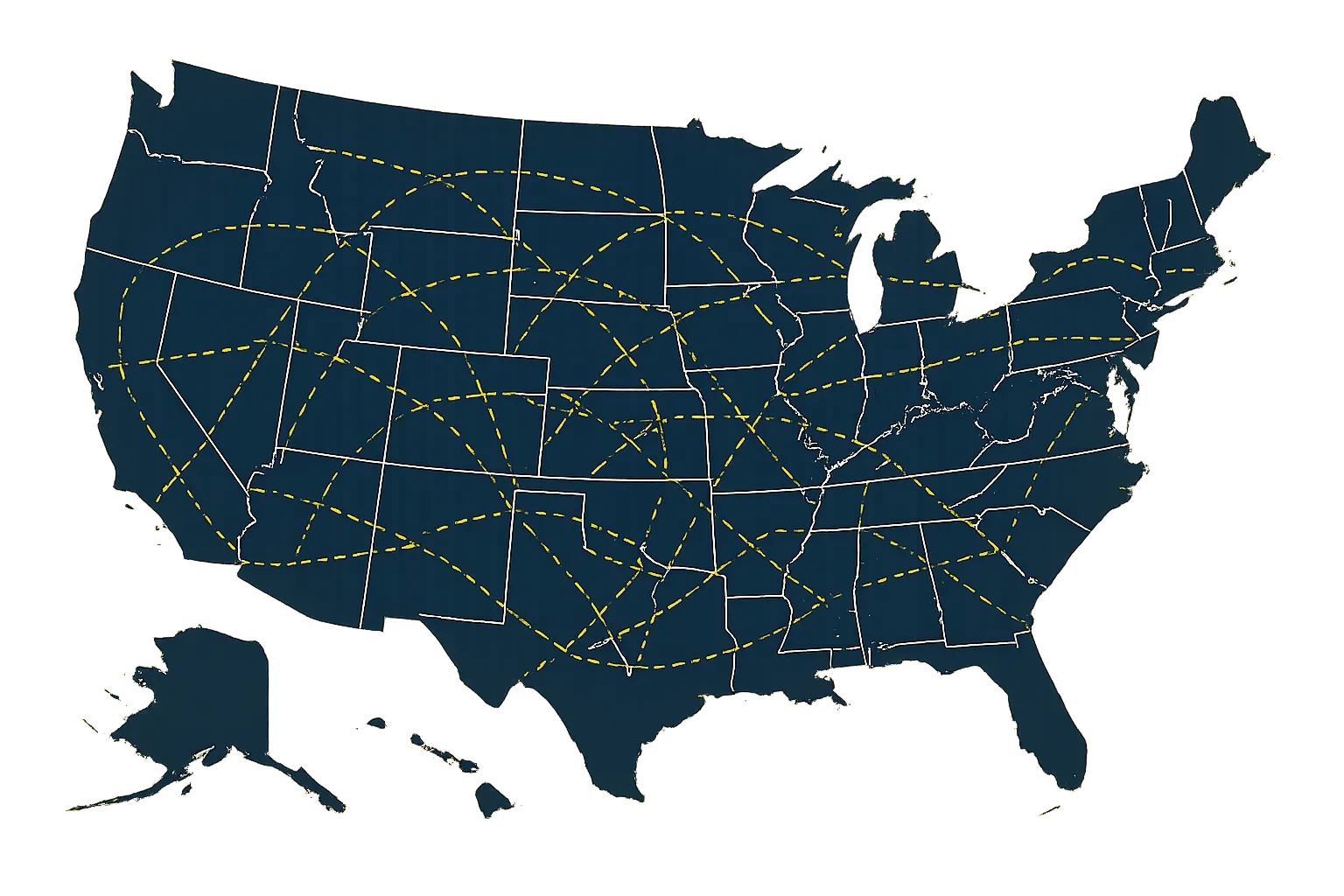
The Precedent
The Nurse Licensure Compact (NLC) covers 40+ states and has been operating since 2000. It allows registered nurses to practice across state lines without obtaining additional licenses. The result: hospitals in shortage states can recruit nationally, travel nursing became a $23 billion industry, and workforce distribution improved in underserved areas.
Where Funeral Compacts Stand
- Minnesota advancing legislation (2026 session)
- Several states in exploratory phase
- National Conference of State Legislatures tracking the issue
- Timeline to meaningful adoption: likely 3–5 years before 10+ states participate
The Staffing Opportunity for Buyers
If your acquisition target is in a compact member state — or one likely to join — you gain significant staffing advantages:
1. Expanded Recruitment Radius
Instead of recruiting only licensed-in-state directors, you can hire from any compact member state. With 60% of funeral directors nationally expected to retire within five years, the states that join compacts first will attract the most talent.
2. Access to New Graduate Pipeline
Mortuary science programs aren’t distributed evenly. States with strong programs (Ohio, Texas, Minnesota) produce graduates who currently stay local because relicensing elsewhere is too costly. Compacts unlock that pipeline for buyer states.

3. Relief and Temporary Staffing
Multi-location operators with hub-and-spoke regional strategies can rotate staff across state lines for vacations, emergencies, or seasonal demand spikes. Currently, this requires each employee to hold multiple state licenses.
4. Cost-Effective Recruitment
With compensation benchmarking varying significantly by state, compacts enable recruitment from lower-cost-of-living states — offering relocation at a salary that’s competitive for the candidate but below your local market rate.
The Competitive Threat Nobody Is Discussing
Compacts are not one-directional. The same portability that lets you recruit also lets competitors enter your market.
What This Looks Like in Practice
- A well-capitalized regional chain in a neighboring state can now staff a satellite location in YOUR market without the licensing delays that previously served as a barrier to entry
- Traveling/relief funeral directors (similar to travel nurses) could serve rural markets remotely, undercutting local operators on labor costs
- Online arrangement companies could partner with compact-licensed directors to serve families in states where they previously couldn’t operate
The Protective Moat Question
Before compacts, local licensing requirements functioned as an unintentional competitive moat. A funeral home in a state with restrictive licensing had fewer potential competitors because the barrier to entry (apprenticeship, state exam, local licensing) was high.
Compacts lower that barrier. If your acquisition thesis depends on limited local competition, you need to reassess.
Due Diligence Questions for Compact-Era Acquisitions
Before closing, add these to your evaluation:
Market Exposure Assessment
- Is this state a compact member? If not, is legislation pending or likely?
- How many funeral homes in neighboring compact states are within 50 miles of the target?
- What’s the competitive density already, and how might compacts change it?
Staffing Viability
- Are the target’s current employees licensed in-state only? (If compacts create mobility, they might leave for better offers elsewhere)
- Does your post-acquisition staffing plan depend on recruiting from out of state? (If so, compacts are a prerequisite — or you need a backup plan)
- What’s the local mortgage/rent cost relative to surrounding states? (High housing costs in compact states create outflow risk)
Strategic Positioning
- Can you use compacts proactively to staff a multi-state operation?
- Is there an opportunity to be the first mover in a market adjacent to a compact state?
- Should you factor compact timing into your acquisition timeline?
If your deal depends on staffing assumptions that only work with or without compacts, that’s a risk factor worth pricing. Resources like Lendesca can help buyers evaluate how staffing constraints and regulatory developments affect deal viability and financing strategies.
The Bottom Line for Buyers
Interstate licensure compacts aren’t here yet for funeral service — not at scale. But they’re coming, and the states that move first will see the most disruption.
If you’re buying in a potential compact state:
- Upside: easier recruitment, larger talent pool, lower staffing risk
- Downside: more competition, potential staff poaching, reduced geographic moat
If you’re buying in a non-compact state:
- Short-term: no change — your market remains protected
- Long-term: you may face staffing disadvantages as talent migrates to compact states
The smart play is not to wait for compacts to arrive and react. It’s to build a funeral home that people want to work at regardless of licensing portability — competitive pay, manageable on-call schedules, professional development, and a culture that retains. The compacts will sort out the licensing. What they won’t sort out is whether your operation is worth choosing.
The funeral industry’s licensing landscape is evolving. Buyers who understand the direction of travel can position acquisitions to benefit from increased workforce mobility rather than be disrupted by it.
Funeral Home Buyer provides educational content for professionals evaluating business acquisitions in the funeral services industry. This article is not legal, financial, or investment advice. Consult qualified professionals before making acquisition decisions.