
A missing professional liability policy. An Experience Modification Rate above 1.0. A claim for remains mishandling that was denied coverage. Each of these tells you something critical about the risk profile of the business you’re buying — risks that won’t show up in the P&L or the seller’s pitch.
Insurance also defines your day-one requirements. You cannot close on a funeral home acquisition without specific policies in place. Your SBA lender will require certificates of insurance before funding. Your state licensing board may require proof of coverage for the establishment license transfer. Miss the timeline, and your closing date moves.
Here’s what to audit, what to flag, and what to have bound before you take the keys.
The Six Policies Every Funeral Home Carries (Or Should)
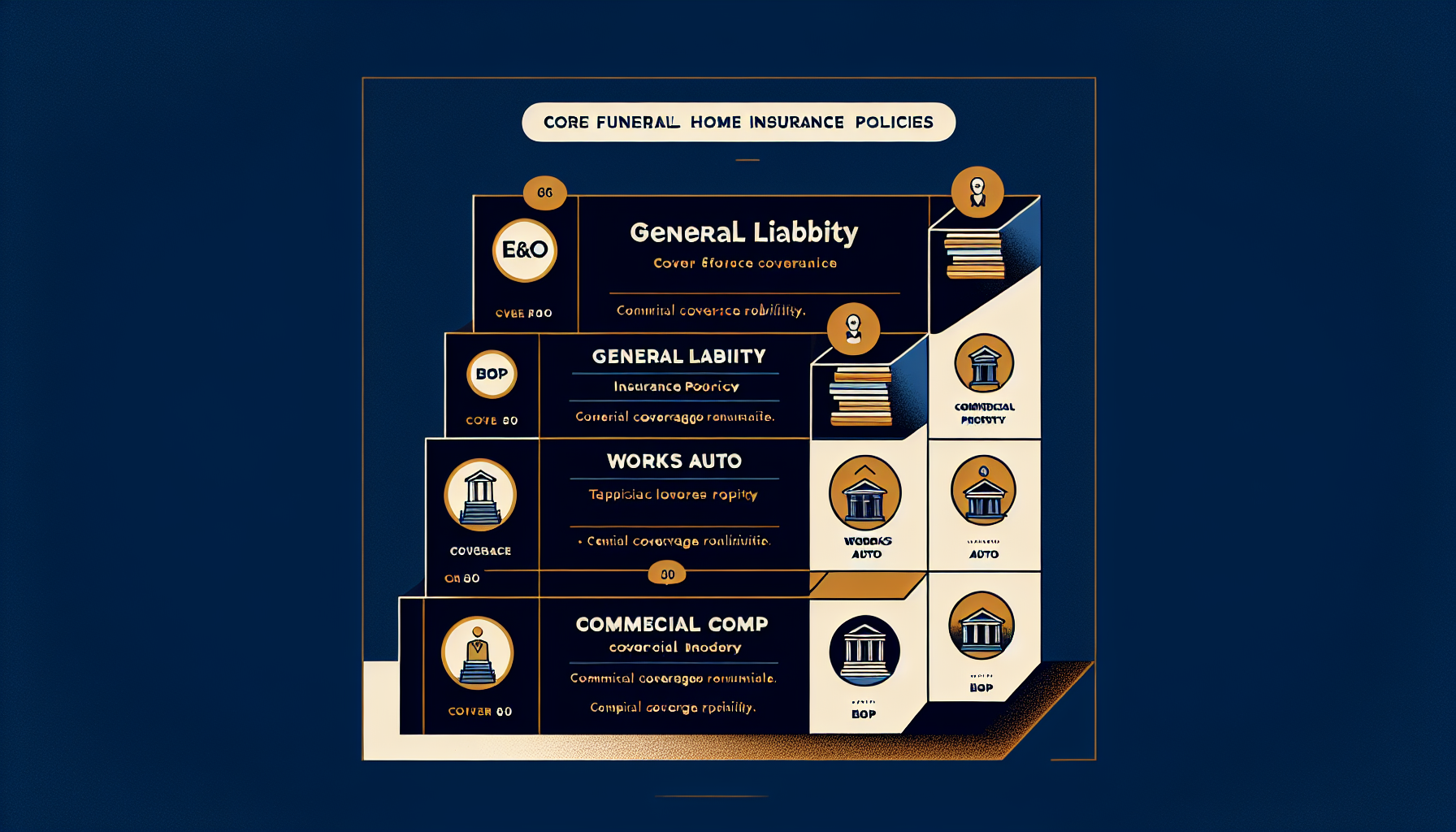
1. Professional Liability / Errors & Omissions (E&O)
What it covers: Claims arising from professional negligence — misidentification of remains, improper embalming, failure to follow family instructions, documentation errors, mishandling of cremated remains.
Typical limits: $1,000,000 per occurrence / $3,000,000 aggregate
Why it matters for buyers: This is the most funeral-home-specific policy in the stack. A claim for mishandling remains can produce settlements in the six-figure range. If the seller has no E&O coverage or carries minimal limits ($100,000/$300,000), that’s a red flag about their risk awareness — and a signal that claims may have gone uninsured.
2. General Liability
What it covers: Bodily injury and property damage on the premises — a mourner trips on a loose carpet, a casket display falls, a vehicle is damaged in your parking lot.
Typical limits: $1,000,000 per occurrence / $2,000,000 aggregate
Why it matters for buyers: Funeral homes host large groups of people, many of them elderly, in emotional states. Falls, injuries, and property damage are not rare events. Verify the policy covers all premises, including any satellite chapels, storage facilities, or off-site locations.
3. Commercial Auto
What it covers: Vehicles used in business operations — hearses, removal vans, flower cars, family cars, and utility vehicles.
Coverage: Mandatory in all states for business vehicles. Should include collision, comprehensive, and liability with limits matching your general liability umbrella.
Why it matters for buyers: Funeral home vehicles are expensive, specialized, and driven in high-stress conditions (processions, removals at odd hours, transport of remains). Review the vehicle inventory against the policy — every vehicle the business operates must be listed. A hearse worth $80,000–$150,000 that’s not on the policy is an uninsured asset.
4. Workers’ Compensation
What it covers: Employee injuries and occupational illness — lifting injuries during removals, chemical exposure in the prep room, vehicle accidents on company business, psychological injury from traumatic cases.
Typical limits: $500,000–$1,000,000 (varies by state mandates)
Critical metric: Experience Modification Rate (EMR). Your EMR compares your claims history to the industry average. An EMR of 1.0 is average. Below 1.0 means fewer claims than typical — your premiums will be lower. Above 1.0 means more claims — premiums rise, sometimes dramatically.
An EMR above 1.2 in a funeral home raises serious questions about workplace safety practices, particularly in the prep room where formaldehyde exposure and lifting injuries are common. For the full breakdown of how EMR transfers in an acquisition and how to negotiate around it, see our workers compensation EMR analysis.
5. Commercial Property
What it covers: The building (if owned), contents, equipment, casket inventory, and business personal property against fire, weather, theft, and other covered perils.
Key distinction: Replacement Cost vs. Actual Cash Value (ACV). Replacement cost policies pay to replace damaged property at current prices. ACV policies deduct depreciation. For a funeral home full of specialized equipment, the difference can be $200,000+ on a major claim. Always insure on a replacement cost basis.
6. Business Owner’s Policy (BOP)
Some funeral homes bundle general liability and commercial property into a Business Owner’s Policy. BOPs often include basic business interruption coverage and are administratively simpler. However, they may carry lower limits than standalone policies and may not adequately cover funeral-home-specific risks.
Review the BOP endorsements carefully. A generic small-business BOP may exclude professional services, pollution, or employee dishonesty — gaps that matter in death care.
Additional Coverage Most Buyers Overlook
Beyond the six core policies, four additional coverages deserve attention. For a deep dive into the five hidden coverage gaps that most commonly produce uninsured losses, see our companion guide.
Business Interruption Insurance
What it covers: Lost revenue when your funeral home can’t operate — fire damage, flood, major equipment failure, building condemnation.
Why it matters: A funeral home generates revenue only when it’s operational. If a fire closes your facility for 6 months, you lose not just current revenue but potentially years of community relationships as families go elsewhere. Coverage should equal 12–18 months of gross revenue.
Employment Practices Liability Insurance (EPLI)
What it covers: Claims from employees alleging discrimination, wrongful termination, harassment, or retaliation.
Why it matters: Ownership transitions are high-risk periods for employment claims. If you restructure roles, adjust compensation, or terminate staff, EPLI protects against the resulting litigation. Given the staffing challenges in death care — documented in the staffing crisis guide — employment disputes during transition are not uncommon.
Cyber Liability Insurance
What it covers: Data breaches, ransomware attacks, and associated costs — notification, credit monitoring, regulatory fines, legal defense.
Why it matters: Funeral homes store sensitive personal data: Social Security numbers, financial information, medical records. The average cost of a data breach is approximately $165 per record. A breach affecting 1,000 families costs $165,000+ before legal fees. Most small businesses — including funeral homes — are underinsured for cyber risk.
Directors & Officers (D&O) Insurance
What it covers: Claims against the company’s leadership for management decisions — regulatory violations, financial mismanagement, fiduciary breaches.
Why it matters: If you’re structuring your acquisition through an LLC or S-Corp, D&O coverage protects your personal assets from claims related to business decisions. It’s especially important if you have partners, investors, or a board.
The Due Diligence Insurance Audit: What to Request from the Seller
Request these ten items during due diligence. Any reluctance to produce them is itself a red flag.
- Complete copies of all current insurance policies — not just certificates of insurance, which show limits but not exclusions, conditions, or endorsements
- Five years of loss runs — claims history from each insurer, showing every claim filed, amounts paid, and open reserves
- Current EMR (Experience Modification Rate) — and three years of historical EMRs for trend analysis
- List of all open or pending claims — any unresolved claim that may produce post-closing liability
- History of coverage denials, cancellations, or non-renewals — being dropped by an insurer signals risk that the insurer won’t tolerate
- Complete vehicle inventory — every vehicle the business operates, matched against the commercial auto policy
- Most recent property appraisal — verify the building is insured at replacement cost, not a decade-old value
- Environmental and pollution coverage documentation — particularly for prep room chemical handling and waste disposal
- Tail coverage or extended reporting provisions — for any claims-made policies (particularly E&O), you need assurance that pre-closing claims will be covered after the policy transitions
- OSHA compliance documentation — safety training records, exposure assessments, and injury logs (OSHA 300 logs) that affect workers’ comp underwriting
Red Flags in the Insurance File
These findings should escalate your concern — and may affect your deal price or structure:
- No E&O coverage or minimal limits ($100K/$300K). The seller is operating without adequate protection against the most funeral-home-specific risk category. Why? Have they been unable to obtain coverage (suggesting a claims history problem), or do they simply not understand the risk?
- EMR above 1.0 (especially above 1.2). Higher-than-average claims frequency signals workplace safety issues. This directly increases your post-closing premium costs and suggests operational problems — typically in the prep room or during removals.
- Any claims involving remains mishandling. These are the most damaging claims in death care — both financially and reputationally. A history of mishandling claims affects your ability to obtain E&O coverage at reasonable rates.
- Lapsed coverage periods. Any gap in coverage history raises the question: what happened during that gap? Uninsured claims from lapsed periods may surface as post-closing liabilities.
- No business interruption coverage. If the seller doesn’t carry it, they either can’t afford it (concerning) or don’t understand the risk (also concerning). Either way, you’ll need to add it — budget accordingly.
- Property insured at ACV instead of replacement cost. Suggests the seller has been cutting corners on premiums. The building may be significantly underinsured.
What to Have in Place Before Closing Day
Insurance binding follows a strict timeline. Start early — not two weeks before closing.

60 Days Before Closing
- Engage a funeral home insurance specialist. Not your family insurance agent. Find a broker who specializes in funeral home accounts — they exist, and they understand the unique coverage requirements. The National Funeral Directors Association maintains a list of endorsed insurance providers.
- Provide the broker with your deal details: purchase price, asset list, property details, vehicle inventory, employee count, projected revenue.
- Request quotes for all six core policies plus any additional coverages identified during due diligence.
30 Days Before Closing
- Finalize terms and coverage limits with your selected insurer(s).
- Confirm lender requirements. Your SBA lender will specify minimum coverage limits, required endorsements (lender as loss payee on property, lender as additional insured on liability), and certificate delivery deadlines.
- Arrange tail coverage for the seller’s claims-made policies if applicable.
Closing Day
- All policies must be bound and certificates delivered. Your lender will not fund without insurance certificates naming them as required. Have your broker standing by to issue same-day certificates.
- Verify vehicle policy effective dates match closing date. Any gap between the seller’s policy cancellation and your policy inception creates an uninsured window.
Week One Post-Closing
- Confirm employee coverage is active — workers’ comp, health insurance (if applicable), and any employee benefit programs.
- Update all registrations and filings with the state insurance commissioner if required.
- Post required notices — OSHA workplace safety posters, workers’ comp notices, and any state-mandated insurance disclosures.
What This Costs (Realistic Budget)
Plan for annual insurance costs in the range of $25,000–$35,000 for a typical single-location funeral home handling 150–300 calls per year. But don’t hold that number flat in your pro forma — see our analysis of how insurance costs escalate over a hold period. Here’s the breakdown:
| Policy | Annual Premium Range |
|---|---|
| Professional Liability (E&O) | $3,000–$8,000 |
| General Liability | $2,500–$5,000 |
| Commercial Auto (3–5 vehicles) | $4,000–$10,000 |
| Workers’ Compensation (3–5 employees) | $3,000–$8,000 |
| Commercial Property | $3,000–$7,000 |
| Business Interruption | $1,500–$3,500 |
| EPLI | $1,000–$2,500 |
| Cyber Liability | $800–$2,000 |
| Total | $18,800–$46,000 |
These ranges assume a clean claims history and standard operations. A funeral home with a high EMR, claims history, crematory operations, or multiple locations will pay more — sometimes significantly more.
Budget $25,000–$35,000 in your financial model as a baseline and adjust based on what your broker quotes.
FAQ — Funeral Home Insurance for Buyers
Can I just take over the seller’s existing insurance policies?
Almost never. Insurance policies are written for a specific named insured — the current owner or entity. At closing, you’ll need your own policies. The seller’s policies will be cancelled or allowed to expire. What you can do is use the seller’s coverage history (loss runs, EMR) to demonstrate to your insurer that the business has been well-managed.
What does my SBA lender actually require for insurance?
Minimums vary by lender, but typical SBA requirements include: commercial property coverage at replacement value (lender named as loss payee), general liability with $1M/$2M limits (lender as additional insured), business interruption equal to the annual debt service, and flood insurance if the property is in a FEMA-designated flood zone.
How does the seller’s claims history affect my insurance costs?
Directly. Your insurer will review the business’s loss runs — not the seller’s personal insurance history. If the funeral home has a history of claims, your premiums will be higher than average. A clean 5-year loss run can save you 10–20% on premiums compared to an account with multiple claims.
Do I need to use a specialist insurance broker?
Strongly recommended. Funeral home insurance involves specialized coverages (E&O for remains handling, prep room environmental liability, preneed trust bonding in some states) that generalist agents may not understand. A specialist knows what to cover, what limits are standard, and which carriers write funeral home accounts competitively.
What happens if there’s a coverage gap during the ownership transition?
Even a single day without coverage creates uninsured exposure. If someone is injured on the premises on closing day and neither the seller’s expiring policy nor your new policy is in force, you’re personally liable. Coordinate policy effective dates precisely — your policy should begin at 12:01 AM on closing day, overlapping with the seller’s policy if necessary.
Should I get key person insurance on my funeral directors?
Yes — especially if you’re operating under an unlicensed-owner model with a licensed managing director. Key person life insurance ($250,000–$500,000 per key employee) provides capital to recruit a replacement if a critical team member dies or becomes disabled. The annual premium is typically $500–$1,500 per $250,000 of coverage for a healthy individual.
Insurance isn’t the exciting part of buying a funeral home. But the seller’s insurance file will tell you more about the business’s risk profile than any P&L — and having the right coverage on day one is the difference between an orderly transition and a liability nightmare. Audit early, bind on time, and budget realistically.